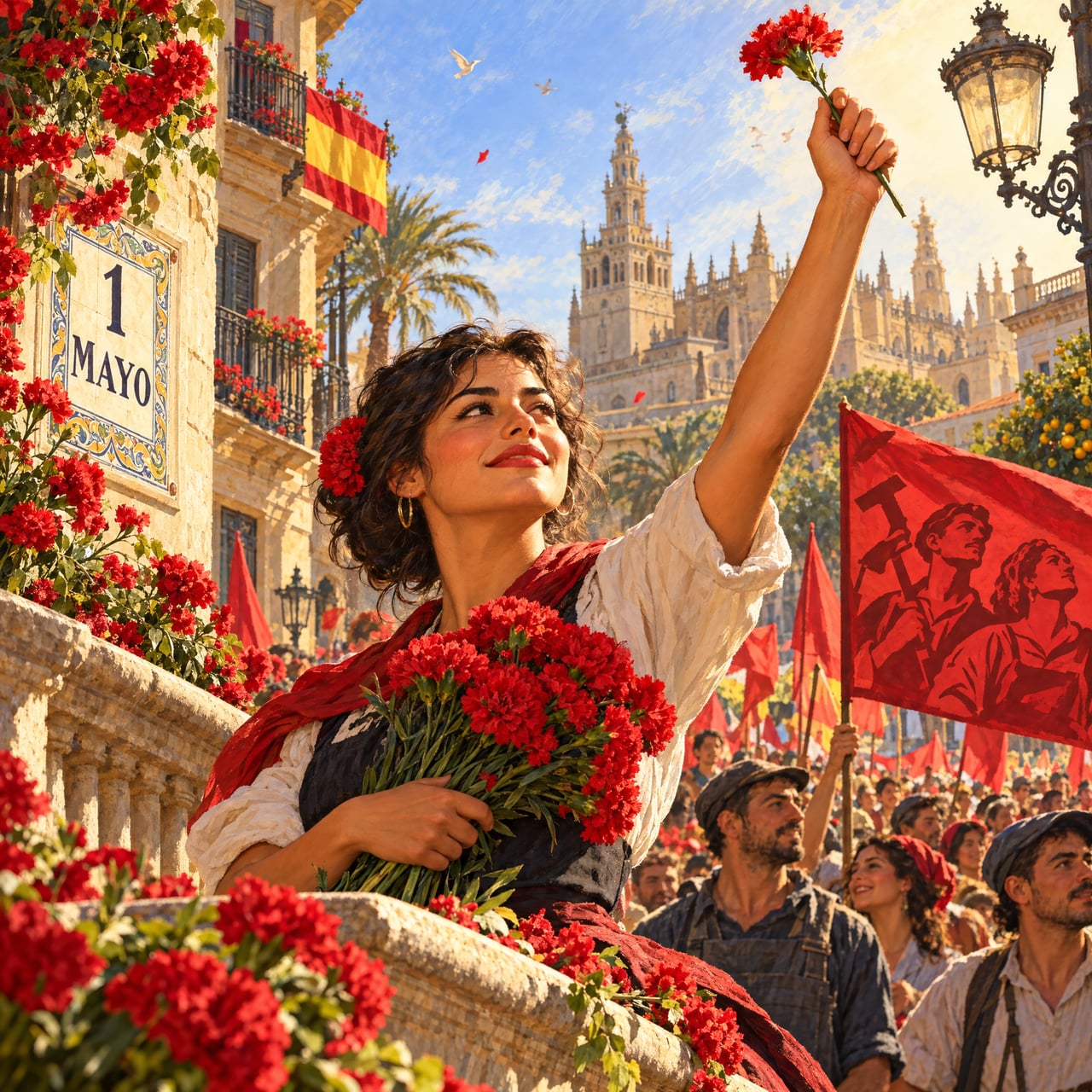
Labour Day
Labour Day is celebrated every 1 May: an international day of workers' claims and rest that Spain shares with much of the world.
National holiday
1 May 2026
49,114,494
Verified data
Labour Day in the working calendar
In 2026, Labour Day is recorded as a national holiday on 1 May 2026. The calendars included in the dataset apply it in 19 regions and autonomous cities, covering 49,114,494 residents in the 2025 register.
This comparison uses only the official working calendars incorporated into the dataset for each year.
| Year | Main date | Where recorded | Residents |
|---|---|---|---|
| 2024 | 1 May 2024 | 19 regions and autonomous cities | 48,587,813 |
| 2025 | 1 May 2025 | 19 regions and autonomous cities | 49,114,494 |
| 2026 | 1 May 2026 | 19 regions and autonomous cities | 49,114,494 |
Demographic profile
Demographics of the covered population
Age, citizenship, birthplace and average-age structure from the 2025 Annual Population Census.
51% / 49%
12.9%
66.4%
20.7%
14.1%
19.3%
44.6 years
How it differs from its surroundings
Comparison with Spain. All five comparisons are population-weighted and use only the 2025 Annual Census. A positive sign means the covered population has a higher value than the benchmark.
| Demographic profile | Covered population | Compared with Spain |
|---|---|---|
| Aged 0–14 | 12.9% | 0 pp |
| Aged 65+ | 20.7% | 0 pp |
| Foreign citizenship | 14.1% | 0 pp |
| Born outside Spain | 19.3% | 0 pp |
| Weighted mean age | 44.6 years | 0 years |
The covered population matches Spain overall on these indicators.
Sex comes from the 2025 municipal register; all other metrics come from the 2025 Annual Census. Each percentage uses the total from its own statistical operation. INE municipal tables 68535 and 68541.
What is Labour Day
1 May recalls the late-nineteenth-century labour struggles for the eight-hour day, especially the Chicago events of 1886. The Second International promoted the date as a day of workers' mobilisation; over time it spread as Labour Day in many countries.
In Spain the day has a strong trade-union and institutional dimension: marches, rallies and events by unions and parties coexist with a broader use of the day off. For many people it is simply a spring long weekend; for others, a date to remember labour rights won and still pending.
The feast is neither religious nor local: its origin is international and civil. That sets it apart from patron-saint festivals or liturgical solemnities and places it among the year's civic dates. The historic slogan of eight hours — eight for work, eight for leisure, eight for rest — still sums up its meaning.
As a fixed spring date, May Day often coincides with good weather and short trips. Its content, however, remains tied to the memory of the labour movement and to the idea that rest is also part of the collective calendar.
Other holidays
Per-municipality data with its official source (regional gazette). Every date is verifiable on the municipality page. Data from festivos.io — CC BY 4.0.